
Why report and record?
A near miss is an accident that just happened to end well. The causes are often the same as in an accident with injury, but you get the chance to step in before anyone is hurt. If you only record accidents with injury, you miss most of the warnings.
Recording also gives you a basis for what you may need to demonstrate: to clients, insurers, authorities and in audits for standards such as ISO 45001 or VCA. A story that only lives in someone's head cannot be verified.
A good register also shows whether you are improving. Is the number of repeat incidents falling, or do the same causes keep coming back? Without records that stays a feeling.
Building a reporting culture
People only report when it feels safe and easy. Always respond to a report with thanks and feedback, and look for the cause in the system, not in the person. As soon as a reporter feels called to account, reporting stops.
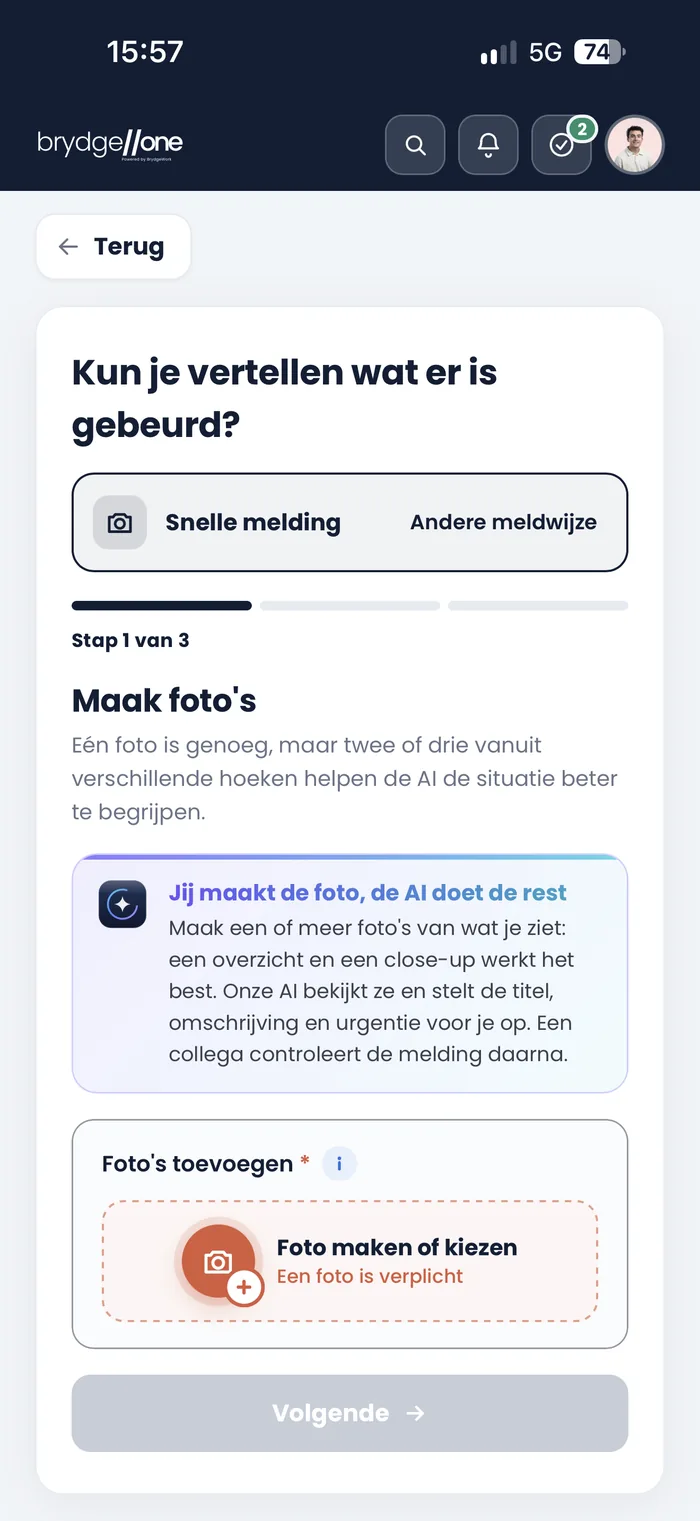
Make reporting low-threshold. A short report with a photo or a spoken explanation beats a long form nobody fills in. Where possible offer the option to report anonymously and show reporters what happened with their report.
An example: an employee reports that a ladder nearly sank into soft ground. Nothing happened, but the investigation shows there is no agreement about ladders on soft ground. By setting that down for all projects, you prevent it from going wrong next time.
What do you record?
Record enough to reconstruct the situation later, but keep the first report short. You add details during the investigation. Think of the following points.
Keep the first report deliberately light. Someone who has to fill in twenty fields will not report next time. An investigator completes the rest later.
- What happened, when and where (project, location or department)
- Who was involved and who witnessed it
- The type of event: accident, near miss or hazardous situation
- The outcome: injury, damage, environmental effect or nothing
- Photos of the situation
- Immediate measures that were taken
- For injuries: type of injury and body part, with attention to privacy
Root cause analysis and risk rating
Not every incident calls for a full investigation. First rate the risk: how likely is recurrence, how often is someone exposed and how serious could the effect be? A simple risk method such as Kinney & Wiruth helps you decide how much attention a report deserves.
For a structural cause or a serious risk you investigate further. Keep asking why something happened, for example with the 5 Whys, until you reach the root cause: a missing provision, an unclear instruction or a schedule that leaves no room. That is where an action really works.
Also write down what went well, for example that a colleague stepped in on time. That shows which protective factors work and keeps the investigation constructive.
Follow-up and trends
A report is only closed once the measures have been carried out and checked. Give every measure an owner and a deadline, and give feedback to the reporter. That shows reporting is worthwhile.
Also look at the whole picture regularly. Which types of incidents occur often, at which locations, during which activities or in which season? Trends show where structural attention is needed, even if each incident looks minor on its own. Discuss the outcomes in meetings and in the management review.
How to put it into practice
A short, fixed route makes sure every report is handled the same way, even when it is busy. Watch for the mistakes that happen most often: reports that get stuck, investigations that stop at someone to blame and measures that nobody checks.
If you see more reports coming in, communicate that this is welcome. A rising number of near misses usually means people dare to report more, and that is good news.
Also choose one person responsible for watching the list of open reports. Without a fixed watcher, follow-up quickly slips into the background.
- Confirm every report to the reporter within a day
- Rate the risk and decide how deep to investigate
- Take immediate action in case of acute danger
- Find the root cause together with those involved
- Record measures with an owner and deadline
- Tell the reporter what was done
- Discuss outcomes and trends in the team periodically
Recording incidents with BrydgeOne
In the Incidents & reports module, reports come in through the platform, the employee app or a public reporting point with a link or QR code, anonymously if preferred. In the app, staff choose a quick report with photos, voice input or a written description. For injuries you point out the body part on a figure you can rotate, and that health data is only visible to people with the right to view injury data.
You calculate the risk class with Kinney & Wiruth, switch on the CAPA review for a structural cause with 5 Whys and an effectiveness check, and the measures flow into Actions. The reporter receives status updates automatically, and you create a report per incident in your own house style.
© 2026 BrydgeOne. General information, not legal or other professional advice. No rights can be derived from this article.